
Handcrafted Traditions – The Artisans Behind India’s Bridal Trousseaus

A bridal trousseau is not just a collection of clothes, jewellery, and accessories. In India, it is a symbol of heritage, artistry, and blessings that a bride carries into her new life. Behind every embroidered saree, handwoven lehenga, or jewel-encrusted bangle are artisans whose skills have been refined over generations. Their craftsmanship transforms ordinary fabric and metal into heirlooms — treasures that tell stories of culture, family, and love.

A Legacy of Craftsmanship
India’s bridal fashion is inseparable from its centuries-old craft traditions. The Banarasi weavers of Varanasi are world-famous for their shimmering silks, woven with motifs that represent prosperity and fertility. In Lucknow, artisans practice delicate Zardozi embroidery, using gold and silver threads to create patterns that glow in candlelight. In the south, Kanchipuram silk sarees are woven with vibrant colours and temple-inspired borders, often chosen for weddings as symbols of purity and strength.
Each region of India adds a unique thread to the bridal trousseau. These artisans are not just craftsmen; they are storytellers who weave blessings, myths, and history into every stitch.
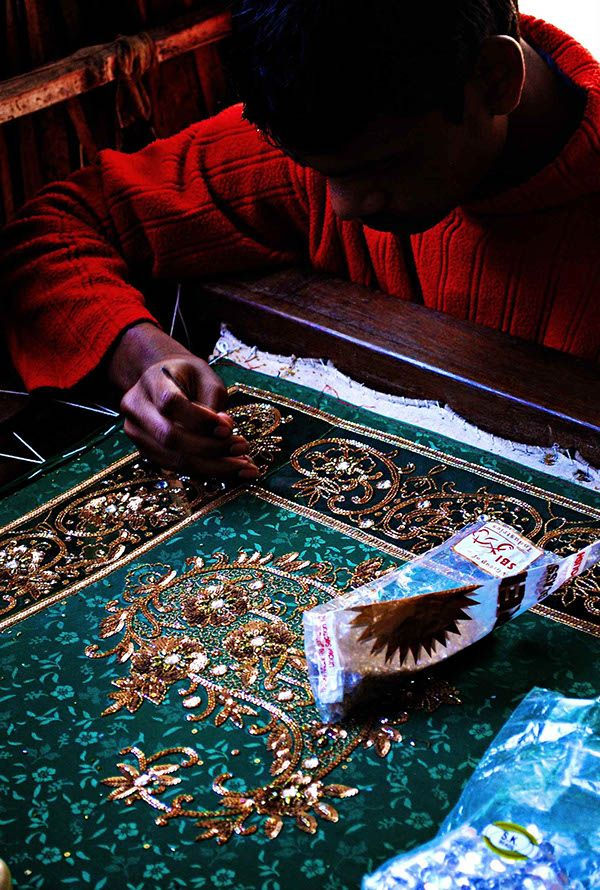
Beyond Fabrics – The Art of Adornment
A bridal trousseau extends far beyond garments. Jewellery, perhaps the most significant part of Indian weddings, is also handcrafted by skilled artisans. Meenakari work from Rajasthan, with its enamel details, or kundan jewellery, with its uncut diamonds, are classic bridal favourites. Goldsmiths and jewellers often spend months creating custom pieces, ensuring that every necklace and bangle is worthy of being passed down as an heirloom.
Even accessories like embroidered clutches, hand-painted footwear, and artisanal perfume bottles are part of this tradition. Each detail, no matter how small, adds to the bride’s unique identity.
Why Handcrafted Still Matters
In an age of mass production and fast fashion, handcrafted bridal trousseaus stand apart. Machine-made garments may be quicker to produce, but they lack the soul and intimacy of handmade work. A handwoven Banarasi lehenga can take six months to complete, while an authentic Pashmina shawl requires weeks of combing, spinning, and weaving.
Every imperfection — a slightly uneven weave or a delicate hand stitch — is proof of human effort and dedication. For brides, this adds emotional value. They are not just wearing fashion; they are carrying history, artistry, and love.
Preserving an Endangered Art
Sadly, many traditional artisans face challenges today. With younger generations moving to other professions and machine-made copies flooding the market, these crafts risk disappearing. Supporting genuine artisans ensures that these traditions continue to thrive. By choosing handcrafted pieces for a trousseau, brides not only celebrate their own heritage but also help sustain the livelihoods of the artists who keep these skills alive.
The Beginning of a Legacy
A bridal trousseau is more than a wedding collection — it is the beginning of a legacy. Every saree, every jewel, and every handcrafted accessory becomes a memory to be passed down to future generations. It is proof that luxury is not only about sparkle and price, but about authenticity, effort, and the stories stitched into every thread.
When a bride chooses handcrafted traditions, she does more than look beautiful on her wedding day — she becomes part of a larger story, one that honours heritage, artistry, and timeless love.


Comments